Manuscripts
Joseph Nichols diary, 1758-1766

You might also be interested in
Image not available
Samuel Nichols papers
Manuscripts
The collection contains letters from Samuel Nichols to family discussing his 1849 overland journey and 1850 ocean voyage to San Francisco via Panama. There are also four letters from his wife, Sarah Ann Taylor Nichols. Among other family papers, there is a diary, from 1821 to 1822, and autobiography, 1821, by Benjamin Hodge, a relative of the Nichols family.
mssHM 48250-48298
Image not available
Samuel Nichols papers
Manuscripts
The collection contains letters from Samuel Nichols to family discussing his 1849 overland journey and 1850 ocean voyage to San Francisco via Panama. There are also four letters from his wife, Sarah Ann Taylor Nichols. Among other family papers, there is a diary, from 1821 to 1822, and autobiography, 1821, by Benjamin Hodge, a relative of the Nichols family.
mssHM 48250-48298
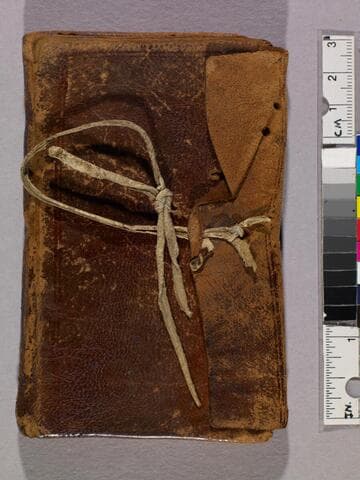
Luke Gridley diary, 1757 Mar. 29-1758 Aug. 23
Manuscripts
The diary covers the period from Mar. 29 through Nov. 10 and includes accounts of the camp life, rumored attacks by Indians, martial punishments, and reports on the surrender of Fort William Henry. Also included is a record of a trip in Aug. 13-23, 1758, records entitled "An a Count of the men of each government" and "Small Pox," and a description of the route and mileage from Hartford to Fort Edward.
mssHM 59425
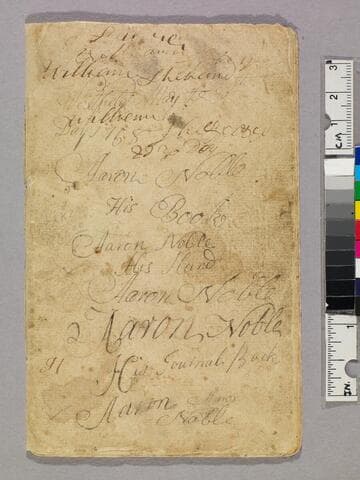
Aaron Noble His Book, 1758, May 30 - Nov. 10
Manuscripts
Military operations at Lake George in June - November of 1758, including news of Massachusetts regiments under command of Col. Timothy Ruggles, Ebenezer Nichols, Jonathan Bagley, and others; operations of James Abercromby, Phinehas Lyman, Rogers' Rangers, Royal Americans, John Bradstreet; communications with the French at Fort Ticonderoga following Abercromby's botched attack; French deserters; camp life, fortification works, the mutiny in the light infantry provincial battalion commanded by Colonel Oliver Partridge on July 22; Indian assaults at Fort William Henry on July 6, 1758 and Halfway Brook in July-Sept. 1758; news of the battle at Fort Ticonderoga and capture of Louisburg.
mssHM 59428
Image not available
Nichols family archive
Manuscripts
The Nichols family archive consists of correspondence, manuscript volumes, military records, and photographs. George Granville Nichols's letters constitute the largest group of correspondence. His letters from Iowa covered economic, social, and political life in the antebellum Midwest. He wrote about the politics of slavery and abolition, and activities of the local fraternities and lodges. His letters also contained detailed discussion of his plans to go West to mine for gold, complete with considerations of logistics, competitors, and financial risks. His wartime letters covered the entire period of his service in the 42nd Massachusetts Infantry Regiment. Nichols's letters to his family contained highly informative and vivid descriptions of the American Civil War in Louisiana, including his encounters with slaves, "contrabands," women of color, "rebels," Confederate prisoners, spies, and even some rather creative cotton smugglers. Smith Woodward Nichols, Jr.'s letters described his studies the Naval Academy and his American Civil War service, including an account of the assault of Fort Fisher. In addition to letters from the Nichols brothers, letters from other family members are present in the collection and present a great resource for examining family and social dynamics of the American Civil War era.
mssNichols
Image not available
Memoriam -- In Memoriam. George Granville Nichols, [1899]
Manuscripts
The Nichols family archive consists of correspondence, manuscript volumes, military records, and photographs. George Granville Nichols's letters constitute the largest group of correspondence. His letters from Iowa covered economic, social, and political life in the antebellum Midwest. He wrote about the politics of slavery and abolition, and activities of the local fraternities and lodges. His letters also contained detailed discussion of his plans to go West to mine for gold, complete with considerations of logistics, competitors, and financial risks. His wartime letters covered the entire period of his service in the 42nd Massachusetts Infantry Regiment. Nichols's letters to his family contained highly informative and vivid descriptions of the American Civil War in Louisiana, including his encounters with slaves, "contrabands," women of color, "rebels," Confederate prisoners, spies, and even some rather creative cotton smugglers. Smith Woodward Nichols, Jr.'s letters described his studies the Naval Academy and his American Civil War service, including an account of the assault of Fort Fisher. In addition to letters from the Nichols brothers, letters from other family members are present in the collection and present a great resource for examining family and social dynamics of the American Civil War era.
mssNichols